Most roof leaks are not where the stain is. This is what to do first, how the entry point actually gets found, what is safe to handle yourself, and what a real repair looks like from start to finish.
Leaking right now?
Do not get on the roof in the wet. Catch the water, move what matters, and call. Active leaks get priority scheduling seven days a week.
Before anyone thinks about the roof itself, the job is to stop the damage spreading through the ceiling. Put a bucket under the drip. Move furniture and anything electrical out of the way. If the ceiling is bulging or sagging, that is a pocket of water sitting in the plaster and it will come down eventually, so keep people out from under it.
One thing worth doing while you wait: photograph the stain from inside, and note the time and what the weather was doing. A leak that only shows up in driving rain from one direction tells a roofer something very different to a leak that runs every time it rains at all. That single detail often saves an hour of hunting.
Water does not fall straight down once it is inside a roof. It gets in at the entry point, runs along a batten, a rafter or the underside of a tile until it hits something that stops it, and only then drops onto the ceiling. It is completely normal for the entry point to be metres away from the wet patch, and often further up the slope.
That is why patching from inside the ceiling never works, and why sealant squeezed over the nearest suspicious looking crack usually just moves the problem somewhere less convenient.
Proper leak detection is done from inside the roof space first, not from the top. In daylight you can often see pinholes of light where they should not be. Water staining on the timbers shows the path the water has been taking, and following that path uphill leads back toward where it got in. Only once there is a candidate does anyone need to go up top and confirm it.
Common entry points on a Sydney tiled roof, roughly in order of how often they turn up:
That last one is the difficult one, because nothing looks wrong. Every tile can be intact and correctly laid and the roof will still leak, because the tiles alone were never going to keep water out at that angle.
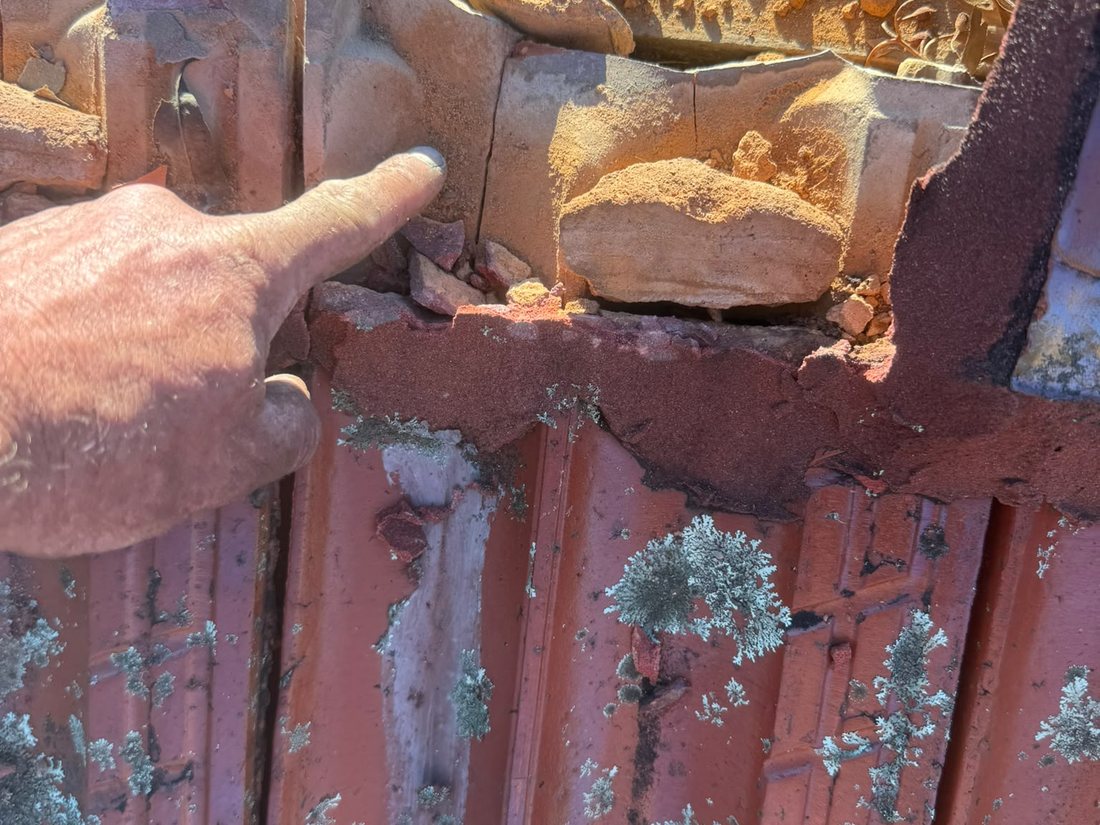
Before getting to the repair, the thing worth showing is what was already there. Someone had been at this roof before.
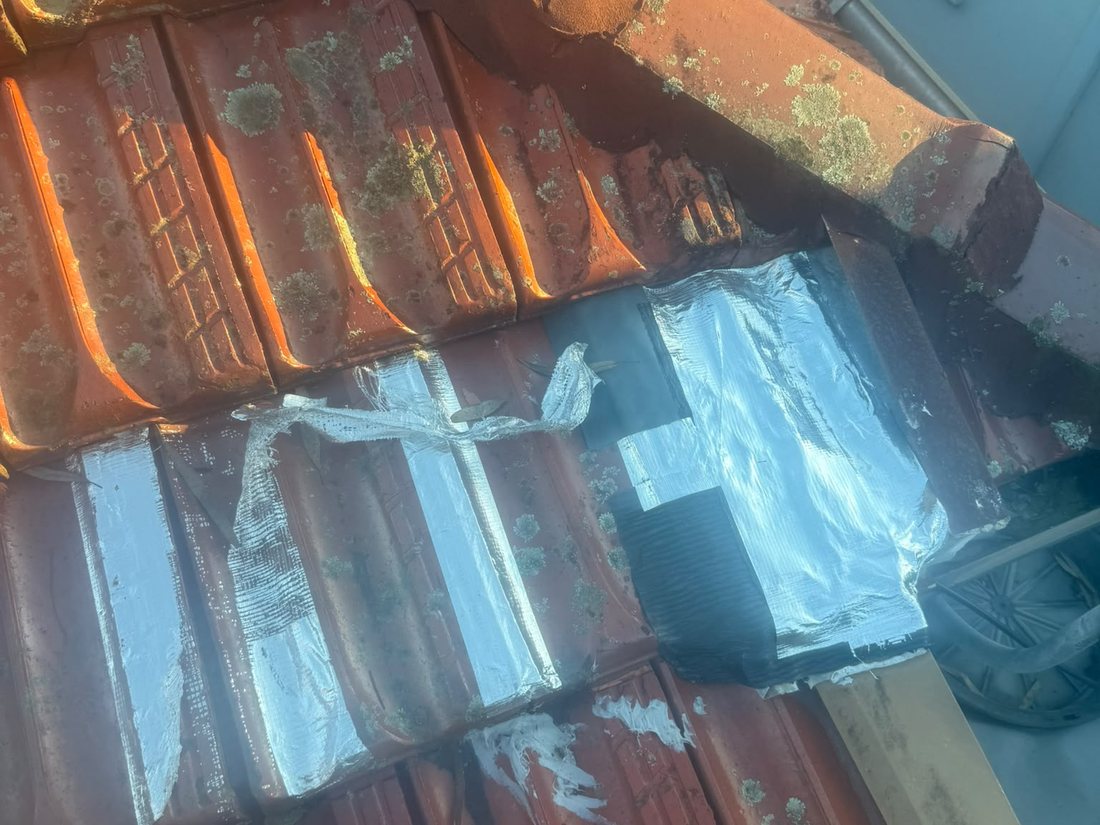
That is foil tape and sealant applied straight over the top of the tiles. It is the single most common thing we find when we get called to a leak that has been going on for a while, and it is almost always someone trying to stop water at the point where they can see it rather than at the point where it is getting in.
It does not work, for a reason that is easy to miss. Patching over the top blocks the path water was taking and pushes it sideways into the next gap along. The leak appears to stop for a while, then comes back somewhere else, usually worse.
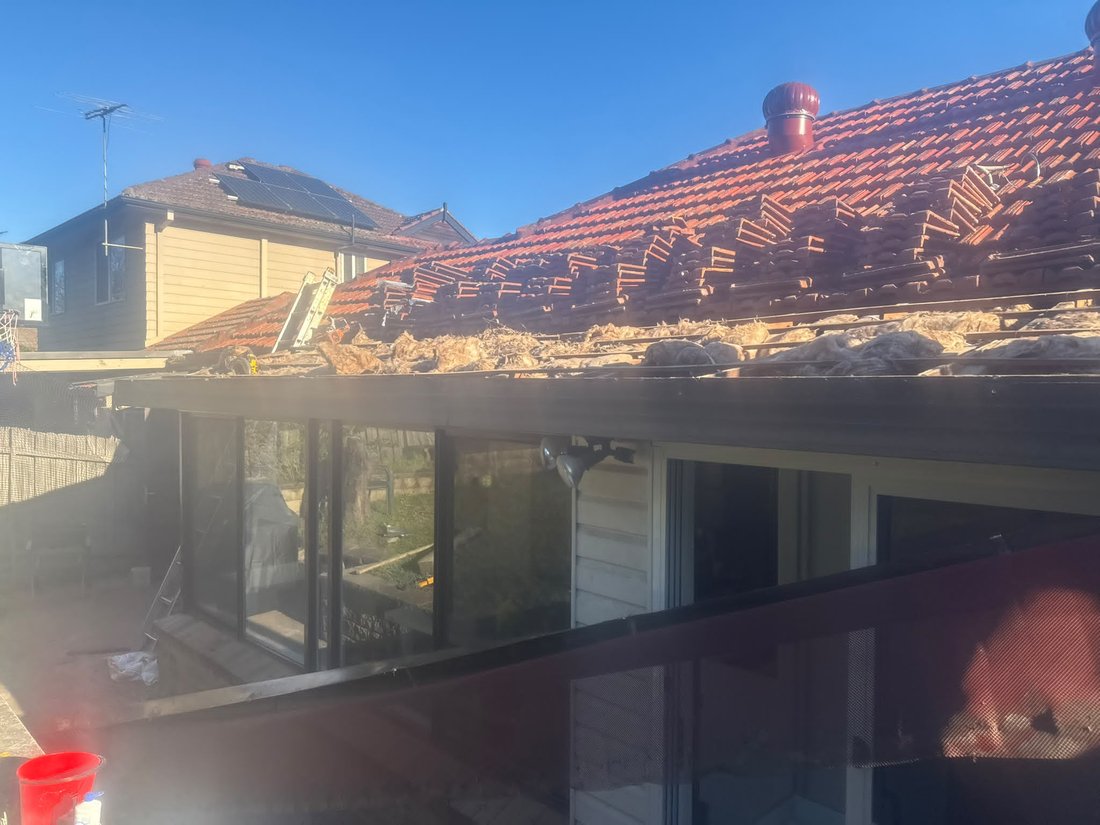
When the tiles came off, this is what was underneath.
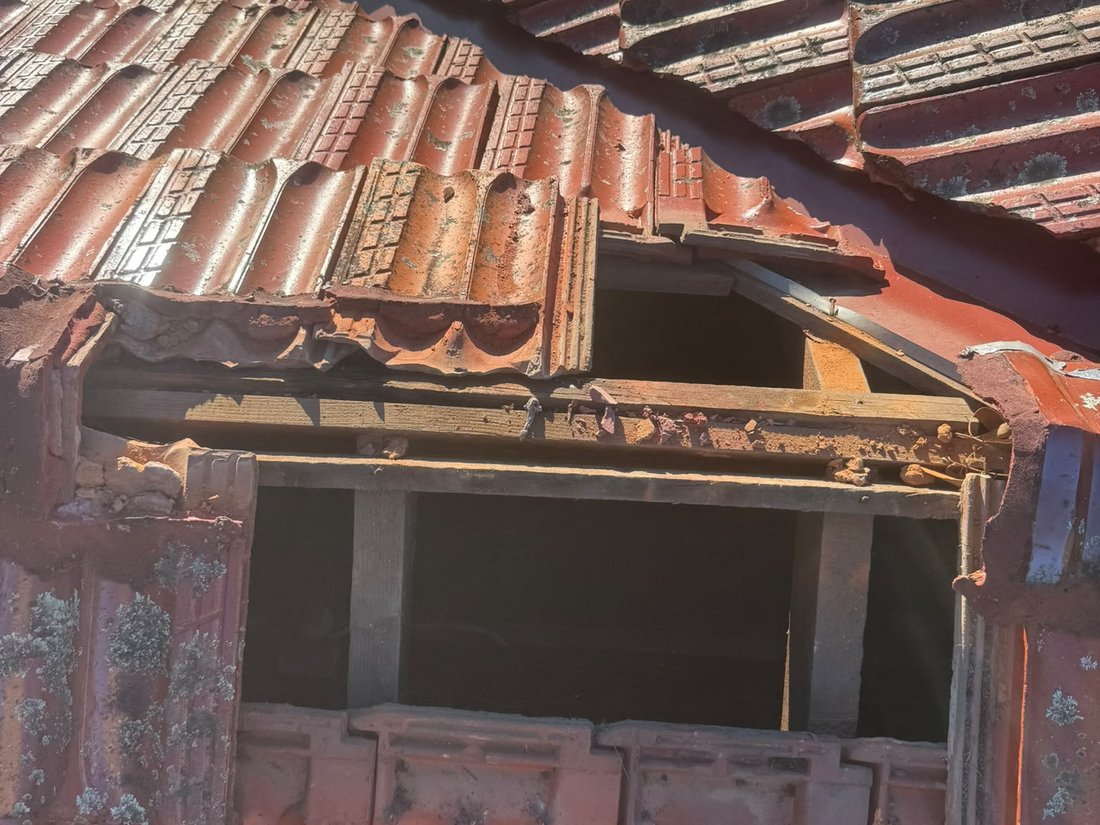
There is no sarking under those tiles. There never was. You are looking straight past the battens into the roof space, and that is not damage, that is how the roof was built.
This surprises a lot of homeowners, so it is worth being plain about it. A great many Sydney tiled roofs have no secondary barrier at all. The tiles are the entire waterproofing system. They shed water down the slope and rely on gravity and overlap to do it, which works well when the pitch is right and the tiles are sound.
Take either of those away and there is no backup. On an under pitch section the water is not running off fast enough, it pushes back up under the laps, and with nothing beneath it, it drops straight onto the battens and through to the ceiling. Which is exactly what had been happening here for years.
Now the tape makes sense. Someone was trying to seal the top surface of a roof that was never sealed in the first place, on a section where the tiles were physically incapable of doing the job on their own. No amount of tape was going to fix that, because the problem was not a hole. The problem was that the roof needed a second line of defence it had never had.
Because the water kept getting in for years while it looked like it had been dealt with, it had been sitting on the timber the whole time.
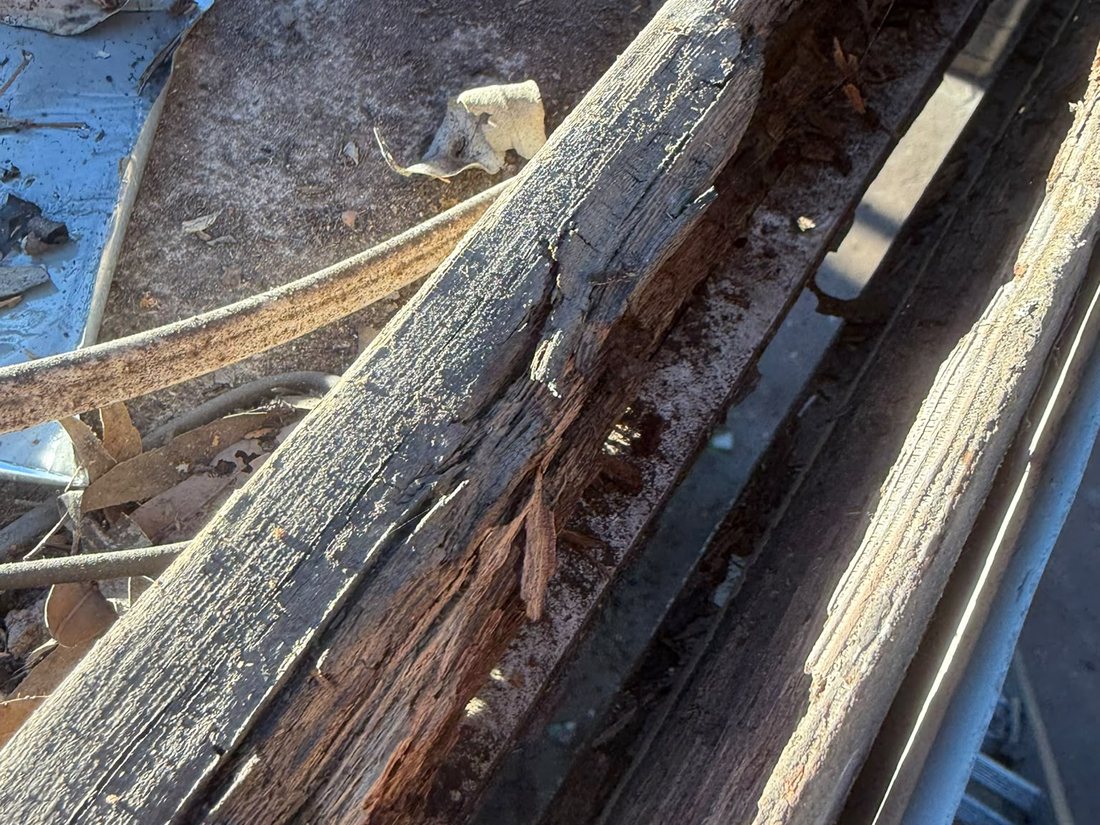
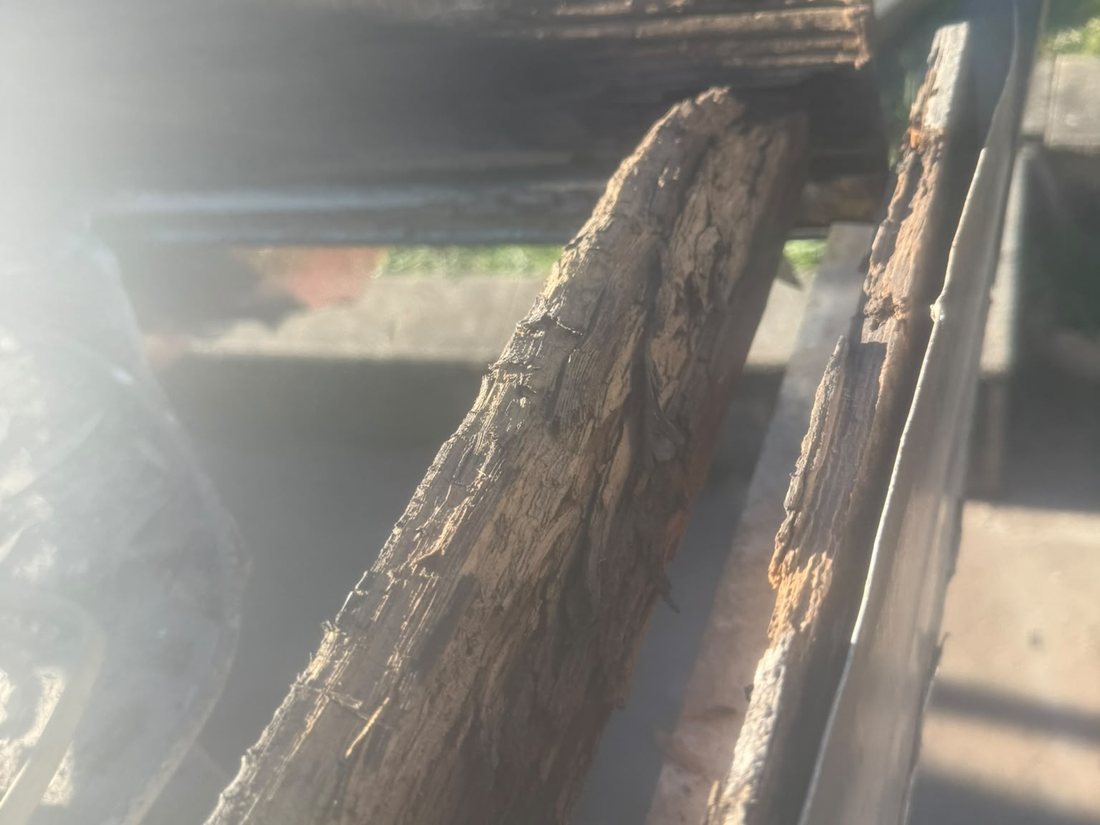
This is the actual cost of patching a leak instead of fixing it. The tape was cheap. The rotted battens underneath it were not, and every year the leak stayed live added to that bill.
Here is the job from 31 July 2026, a tiled home in Lugarno in southern Sydney, walked through as it happened. It is the common case: a roof that leaks, an owner who does not want to spend replacement money, and a targeted repair that solves it.
The thorough fix for a roof in this condition is to strip the whole thing, sark it end to end and re-lay every tile. That works, and on a roof at the end of its life it is the right call. On this roof it was not, because the rest of the roof was doing its job. The failure was concentrated in an under pitch section, meaning a run of roof sitting at a shallower angle than the tile profile is rated for, so in heavy or wind driven rain the water pushes back up under the tile laps instead of running off.
So the work was confined to the section that was actually failing.
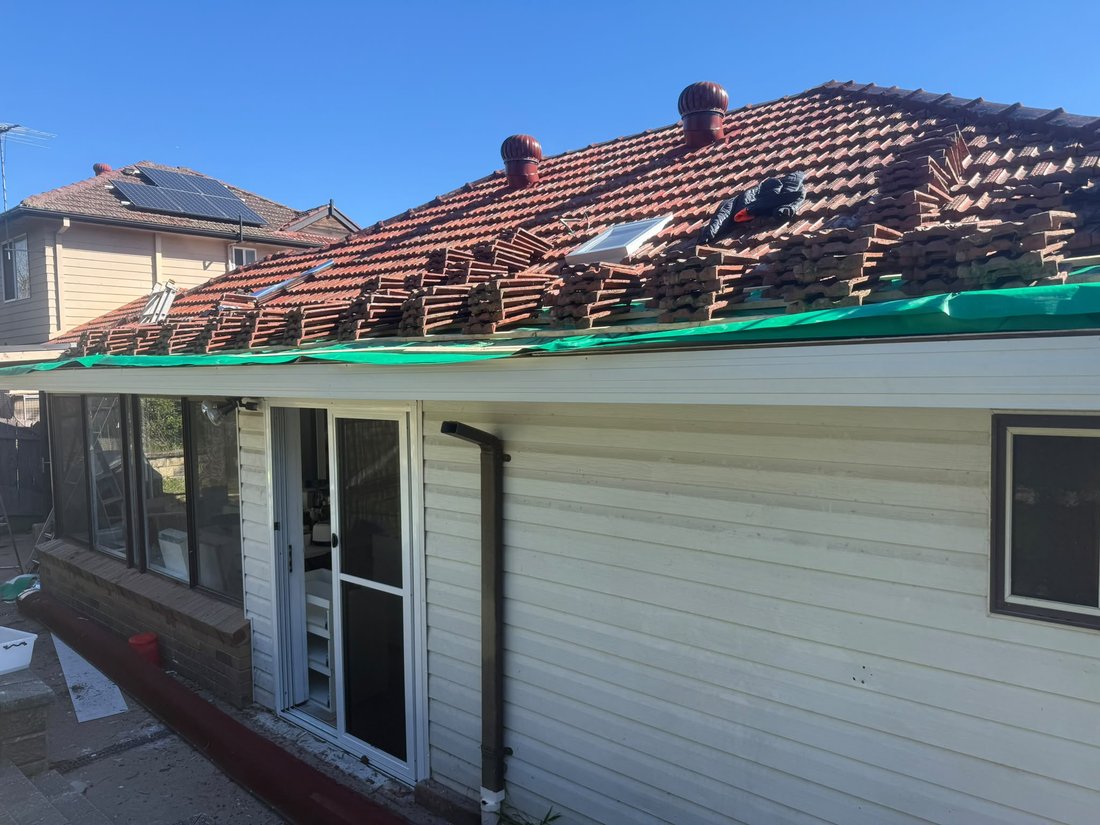
Worth setting expectations, because this is the part people ask about. For a day the roof is open, your tiles are stacked in rows across the rest of the roof, and there is a skip or a stack of old timber somewhere in the yard. It is noisy, there is dust, and it looks considerably worse halfway through than it did before anyone arrived.
The section that is open gets closed the same day. Nobody leaves a roof open overnight, and if weather turns before the tiles are back on, it gets covered.
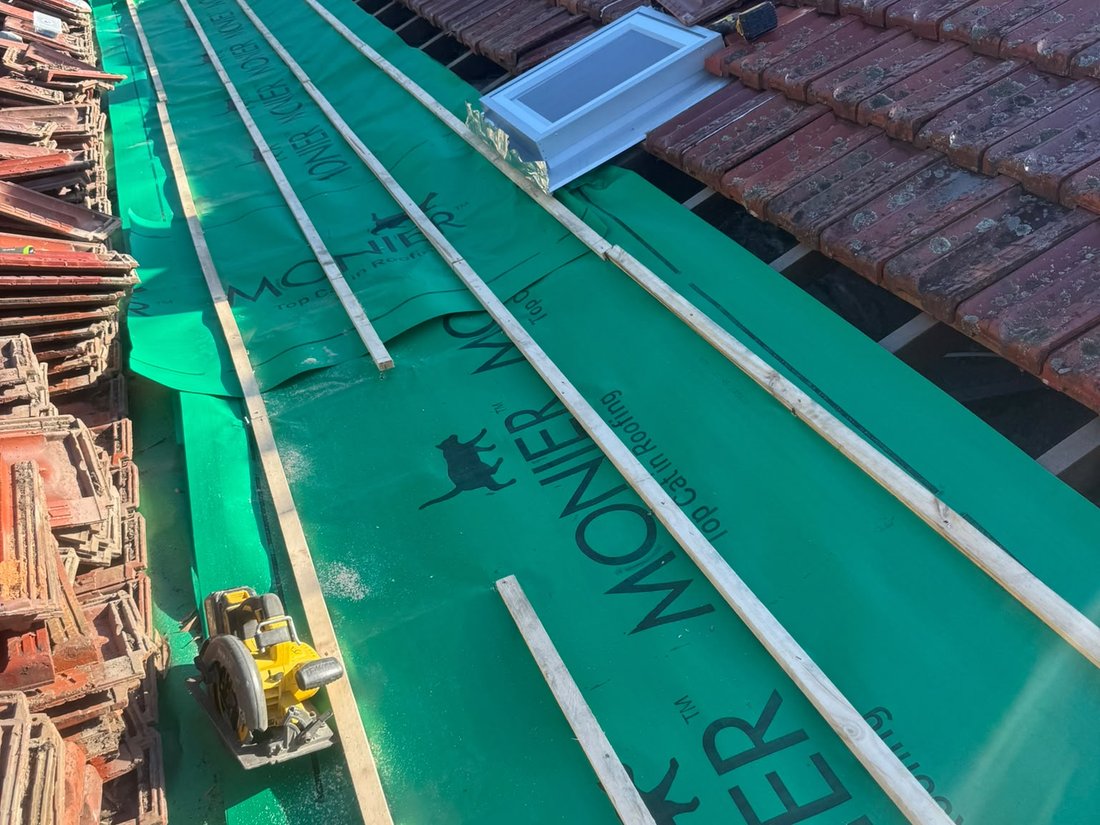
That green sheet is the whole job. It is the layer this roof never had, and it is why the same rain that has been coming through for years now runs down it and out into the gutter instead.
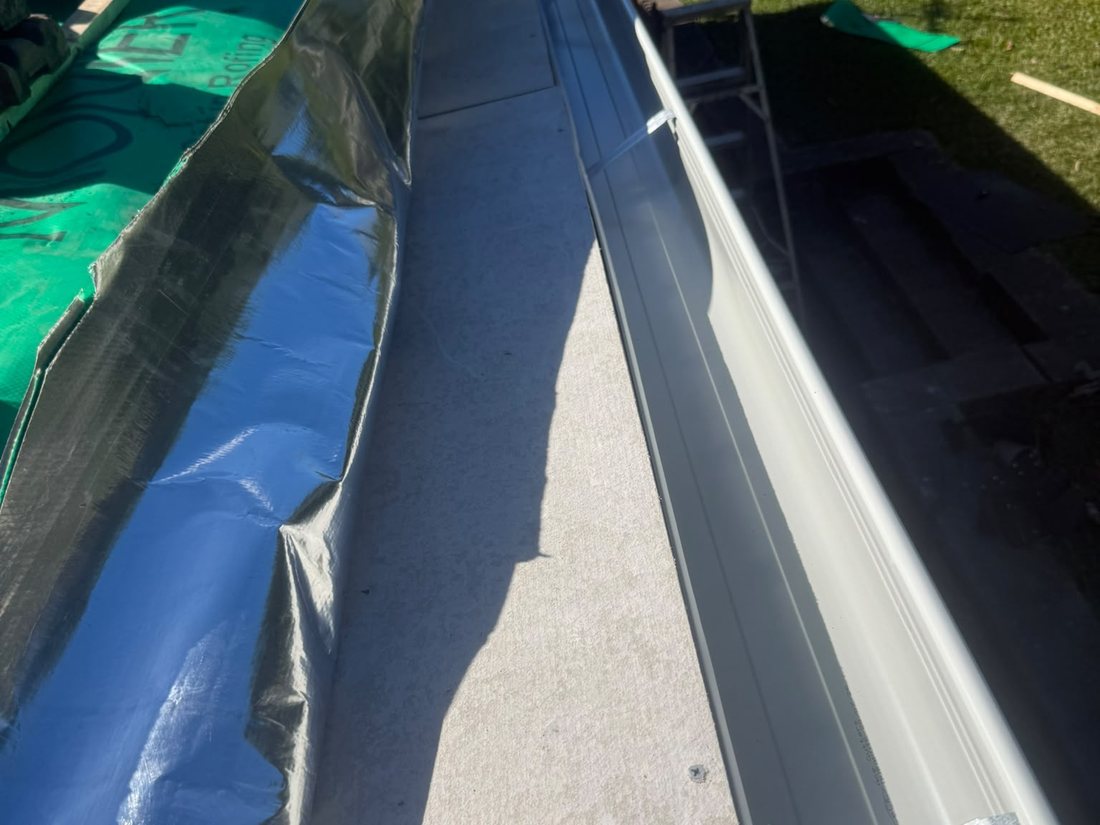
The old gutters and fascia covers came off and a new high front quad gutter system went on, along with new fascia covers and barge flashings. Worth doing in the same visit for a straightforward reason: the access, the setup and the travel are already paid for. Coming back in a year to do the gutters separately costs the homeowner more than doing it now.
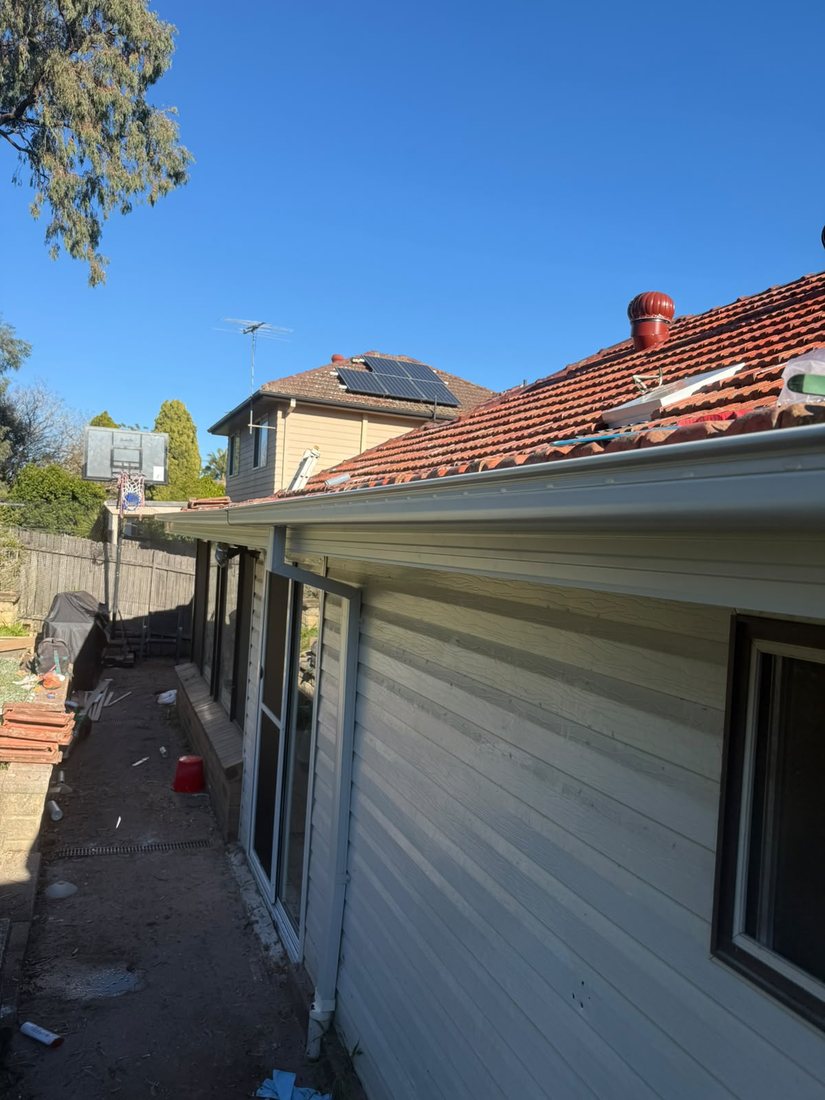
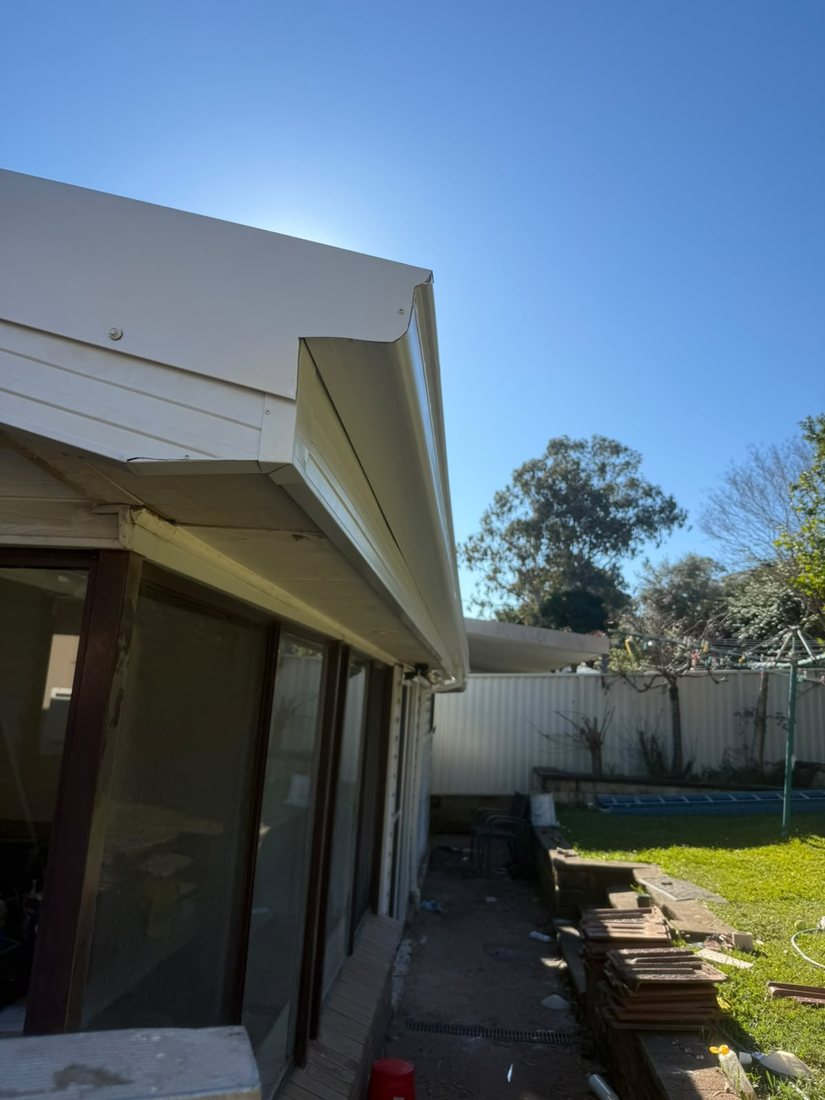
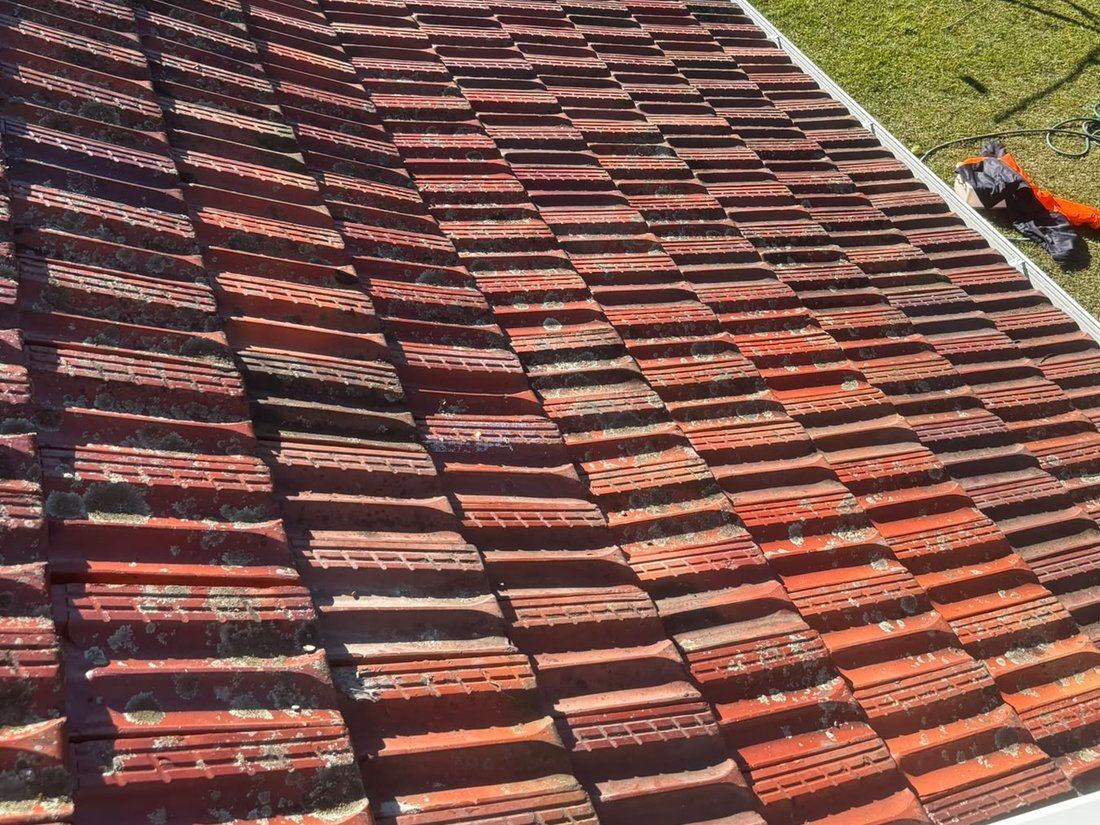
The roof still looks its age in the finished photos, because it is its age. Nobody paid to make it pretty. They paid to stop water coming into their house and to stop it eating the timber, and that is what they got, for a fraction of what a full replacement would have cost.
For a targeted leak repair of the kind above, meaning a defined section stripped back, sarked and re-laid rather than the whole roof, the range in Sydney is roughly $4,000 to $6,000. That is the honest working range, not a quote, and where a job lands inside it depends on the things below.
Set that against the alternative. A full tile roof replacement on a typical Sydney house runs into the tens of thousands, and our own roof replacement cost calculator will price yours from satellite in about thirty seconds if you want the comparison in front of you. The reason this job was worth doing as a repair is that it solved the problem for a fraction of that number, on a roof where most of the tiles were still doing their job.
The trap to avoid is the other direction. Two hundred dollars of tape and sealant looks like the cheap option right up until you are paying to replace battens that rotted underneath it, which is precisely what happened on this roof before we got there.
What does move the number, whatever the range turns out to be: how much roof has to come off, whether the battens underneath are sound, access and pitch, and whether the cause is one entry point or several. A single cracked tile and a failed under pitch section are the same symptom and very different jobs.
If what you are actually weighing up is repair against replacement, our roof replacement cost calculator measures your roof from satellite and prices a full replacement, so you can see what the expensive end of the decision looks like before you commit to anything.
The general rule in Australia is that insurers cover sudden and accidental damage, and exclude gradual deterioration and lack of maintenance. A tile cracked by a falling branch in last night's storm is usually a claim. A valley that has been rusting for fifteen years usually is not, because from the insurer's position that is wear the owner was expected to keep on top of.
Where it gets argued is the middle: storm damage on a roof that was already tired. Insurers will often accept the storm damage and decline the underlying condition, which can leave you covered for part of a repair.
What helps a claim, regardless: dated photos of the damage, the weather on the day, and a written report from a licensed roofer describing the cause rather than just the fix. We provide that report as a matter of course, because it costs us nothing and it is frequently the difference between a claim being accepted and declined. Read more on storm damage and insurance work.
None of that is insurance advice, and your policy wording is what governs. Read the product disclosure statement or call your insurer.
Sometimes, and it depends what is leaking. Roof plumbing, meaning gutters, downpipes, flashings and metal roofing, sits with a licensed roof plumber. Tiled roof work, meaning lifting tiles, battens, sarking, bedding and pointing, sits with a roof tiler. Plenty of leaks touch both, which is why it is worth asking whoever you call which licence they actually hold before they arrive.
Ours is NSW licence 488966C and it is publicly verifiable.
Most leaks are repairable. A full replacement is the right answer when the roof is at the end of its life across the board, not when one section is failing. The job above is the ordinary case: one section fixed properly, the rest of the roof left alone.
A targeted repair, where a defined section is stripped back, sarked and re-laid rather than the whole roof, typically runs $4,000 to $6,000. A single cracked tile is far less. A full replacement is many times more. What moves it is how much roof has to come off, whether the battens underneath are sound, access and pitch, and whether the cause is one entry point or several.
Finding the cause is usually the same visit. The repair itself depends entirely on what is behind it. A cracked tile is minutes. Stripping back a section, sarking it and re-laying is a day's work.
Almost always wind direction or rain intensity. Leaks that need driving rain from one particular direction usually point at flashing, or at a section of roof below the pitch its tiles are rated for.
Sealant over the visible symptom is the most common way a small leak becomes an expensive one. It blocks the path the water was taking and sends it somewhere else inside the roof, usually somewhere you will not notice until the damage is worse.
Related: roof leak repairs Sydney · gutter repairs Sydney · tile roof repairs Sydney · emergency roof repairs
Enter your suburb or postcode and we'll confirm a licensed roofer covers your area.
Small roof problems become expensive water damage fast. Get a licensed roofer on the roof this week. Free inspection, photo report and a fixed written quote with no obligation.
Book My Roof Leak Inspection 📞 Call 1300 304 162
We reply within 1 business day — usually much sooner.
