
Most houses lost to bushfire in NSW are not taken by the fire front. They are lit by embers, often an hour before the front arrives or well after it has passed, and the roof is where the embers get in. A roof that keeps water out in a storm does not automatically keep embers out in a westerly, because embers go where water never does: up, sideways, and into gaps the size of a five cent piece.
This is for homeowners on the bush edge of Sydney: Hornsby and Berowra, Ku-ring-gai, the Northern Beaches hinterland, the Shire bush suburbs from Engadine to Illawong, the Hills from Dural to Kenthurst, and the lower Blue Mountains fringe.
Embers, not flames, are what get into a roof
An ember is a burning piece of bark or leaf carried on the wind, sometimes kilometres ahead of the fire. They land on a roof by the thousand, and wherever the wind pushes air through a gap, embers go with it.
Inside the roof cavity is dry timber, decades of dust and leaf litter, and in older homes paper backed insulation. One ember that stays alight in that lot has the roof space burning before anyone inside knows. Bushfire roof design comes down to one idea: close every gap an ember can get through, and take away the fuel beside the gaps you cannot.
Where embers get into a Sydney roof
Ridge and hip capping
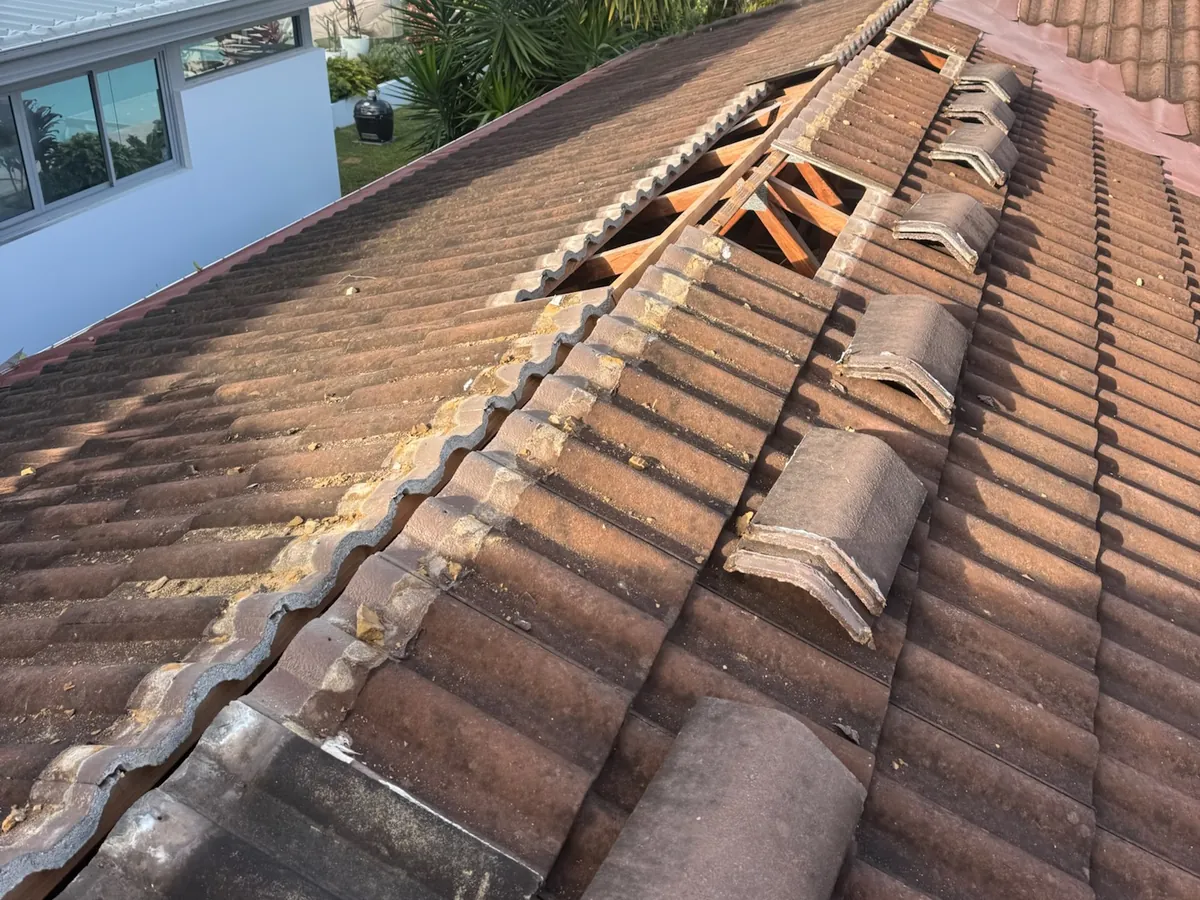
The caps along the top of a tiled roof sit on a bed of mortar. When that bedding cracks and falls out, which it does on every tiled roof eventually, there is an open slot under each cap straight into the cavity. On a fire day that is a row of ember scoops along the highest, windiest line of the house.
Valleys
Where two roof planes meet, the tiles are cut to the valley iron and the cut edges leave gaps. Leaf litter builds up in the valley, dries over summer, and sits beside those gaps. Fuel and an opening in the same spot.
Gutters full of leaves
A gutter full of dry leaves is a trough of kindling bolted to the edge of the house. It catches, and the fire burns up under the first row of tiles into the fascia and eaves. Clearing gutters is the cheapest thing on this page.
Unsarked tile roofs
A large share of Sydney tiled roofs built before the 1990s have no sarking. Lift a tile and you are looking at the battens and the insulation. On those roofs every tile overlap is an open gap into the cavity, and there are hundreds of them.
Broken tiles, vents and box gutters
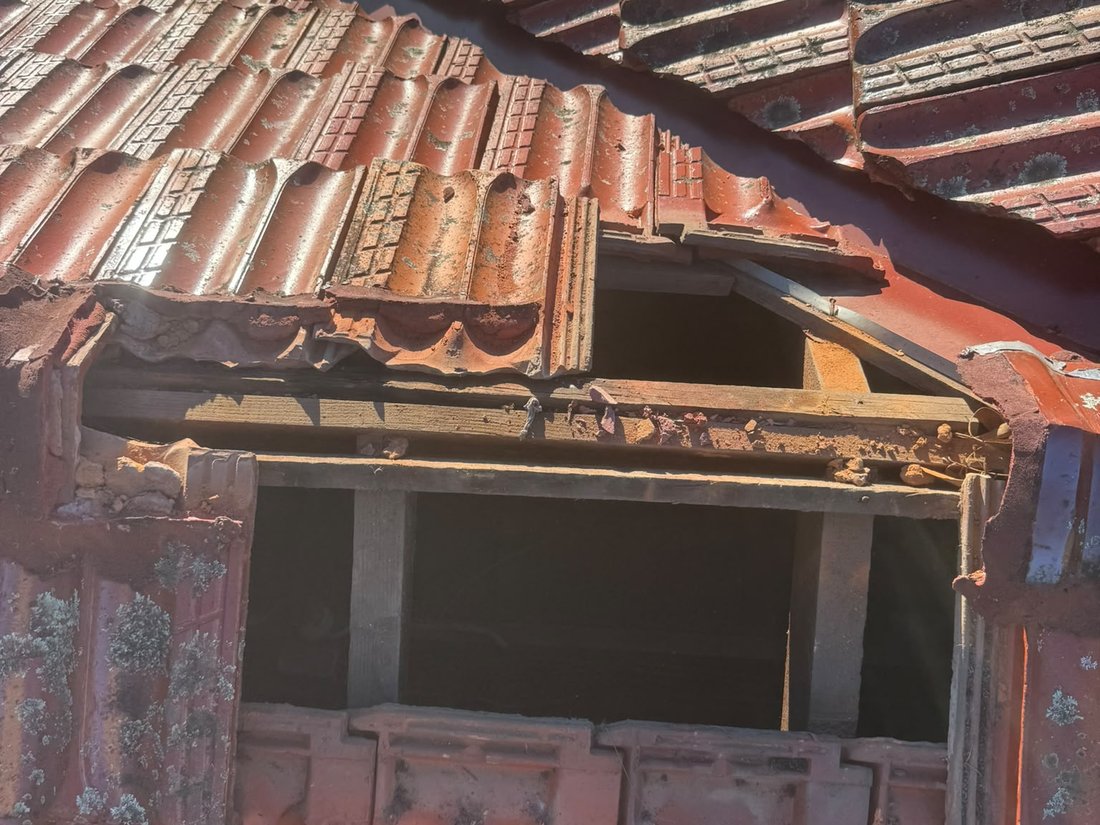
A cracked or slipped tile is a hole, usually left by someone walking the roof to fit an aerial or solar. Whirlybirds and vents without ember mesh draw air into the roof by design, and flues, pipes and skylights are deliberate holes that need checking. A box gutter, hidden inside the roofline, fills with leaves, is hard to clear, and fails into the house.
What BAL ratings mean for your roof under AS 3959
BAL is the Bushfire Attack Level from AS 3959, the Australian Standard for construction of buildings in bushfire prone areas. There are six levels: BAL LOW, 12.5, 19, 29, 40 and FZ (Flame Zone). The number is the radiant heat in kilowatts per square metre the building is expected to cope with. FZ means direct flame contact.
AS 3959 is a construction standard: it applies to new homes and to alterations that need consent on bushfire prone land, and it does not force you to retrofit an existing roof. But what it describes is exactly what protects an existing house, so it is the best checklist there is for an older roof. The standard has been revised more than once and councils apply it through their own conditions, so check with your council or an accredited BAL assessor before relying on any summary, including this one.
BAL 12.5 and BAL 19
Ember attack is the main risk. The roof needs a non combustible covering (tile or metal both qualify), sarking under a tiled roof, and every gap over 3 mm closed with mortar, non combustible fillers or ember mesh, which is corrosion resistant metal mesh with openings no larger than 2 mm. Vents, whirlybirds and any opening into the roof space get screened with it. Gutter guard, if fitted, has to be non combustible, which rules out plastic mesh. Skylights have their own glazing and screening rules.
BAL 29
Radiant heat steps up and embers are still the main way a house is lost. A tiled roof is fully sarked, all gaps sealed, every penetration ember screened, and the rules around roof lights, eaves and fascia tighten. A tiled roof at BAL 29 needs to be in genuinely good condition.
BAL 40
High radiant heat and some flame contact. Everything above applies and the materials get stricter: ember mesh has to be steel or bronze rather than aluminium, gutters, downpipes and fascias are expected to be non combustible, eaves linings have to meet the standard, and roof lights are heavily restricted.
BAL FZ
The fire front can reach the building. The roof has to be a tested system with a specified fire resistance, nothing combustible can be exposed on the outside, and skylights are generally not permitted. This is specialist work with a bushfire consultant and certifier involved from the start.
How a BAL rating is worked out in NSW
Your council keeps a Bush Fire Prone Land Map, which you can check on the NSW Planning Portal. If the land is mapped and you are doing work that needs consent, you need a BAL assessment from an accredited BAL assessor (FPA Australia runs the BPAD accreditation) or, for some applications, the NSW Rural Fire Service. It looks at the vegetation within about 100 metres, the distance, the slope and the regional Fire Danger Index, following the RFS guideline Planning for Bush Fire Protection. We are roofers, not assessors: the rating has to come from someone accredited to give it. The FireRescue Training Hub has a Bushfire Attack Levels (BAL) and your property guide that walks through the assessment in more detail.
Tile versus Colorbond in ember attack
Both are non combustible and accepted at every BAL level, so this is not about the material catching fire. It is about gaps.
A tiled roof has hundreds of overlaps, a mortar line along every ridge and hip, and cut tiles at every valley, so it relies on sarking, sound bedding and sealed valleys. An older unsarked tile roof with tired bedding is the most exposed roof on a bushfire block. A Colorbond roof has far fewer openings but they are easy to miss: the corrugation ends at the ridge and gutter line, the sheet laps, and every screw and penetration. Those corrugation gaps need profile fillers or ember mesh, and sarking under the sheets still matters.

The honest verdict: either can be made ember tight, and the condition of the roof you have matters far more than which one it is.
What a roofer checks before fire season
A pre season inspection takes about an hour, from the roof and from inside the roof space, and you get the photos.
- Ridge and hip capping: bedding and pointing, lifted caps, open slots under them
- Valleys: litter cleared, condition of the iron, whether the cut tile edges are sealed
- Gutters and box gutters: cleared, rust, and whether any existing guard is metal or plastic
- Tiles: cracked, slipped or missing, especially around aerials and solar
- Sarking: whether there is any and its condition, checked from inside the roof space
- Penetrations: whirlybirds, vents, flues, pipes and skylights, each ember screened or not
- Branches overhanging the roof, debris on it, and downpipes running clear

Pre season checklist you can do from the ground
None of this needs you on the roof. This list sits alongside the NSW RFS property preparation guide and bushfire survival plan, not instead of them.
- Sight along the ridge line for caps sitting proud or crooked, and for missing mortar
- Look at every valley for leaves. If you can see litter from the ground there is more you cannot
- Check the gutters for leaves above the lip or plants growing out of them
- Look at the tiles below any aerial, solar panel or aircon unit for cracks or slipped courses
- Check every whirlybird, vent and flue for a metal mesh screen that is intact
- Get into the manhole on a bright day and look for daylight through the roof. Daylight is a gap. If you can see the back of the tiles, there is no sarking
- Cut back branches overhanging the roof and clear any debris on it
- Check every downpipe runs clear, and have gutter plugs ready so the gutters can be filled on the day
What ember guard and gutter guard work costs
A working range, not a quote. Fitting non combustible ember guard or gutter guard mesh in Sydney typically runs $25 to $45 per lineal metre installed, which puts most single storey homes between $1,500 and $4,500 depending on gutter length, roof profile and whether valleys and box gutters are included. Sealing open gaps at ridges, valleys and penetrations is quoted on what we find and starts from $700. Rebedding failed capping, or sarking a section with none, are their own jobs, and a roof that needs them for embers almost always needs them to stop leaking as well.
Every quote is fixed and in writing after a free inspection with a photo report. The work is done by licensed roofers (NSW Licence 488966C) with $20M public liability insurance and carries our 10 year workmanship warranty.
When to call
Book before the Bush Fire Danger Period, which in the Sydney area usually starts on 1 October. September is ideal, October is still fine, and once the first total fire ban is declared every roofer on the interface is booked out. Call sooner if capping has lifted, valleys or box gutters you cannot reach are full, there is no sarking, or the roof is over 25 years old and has never been checked.
A roof that has been leaking is also a roof with an ember path, because water and embers use the same gaps, so get the roof leak repairs and the ember work done in the same visit. If a fire or storm has already damaged the roof, use the emergency roof repairs line and we will make it safe first.
We work across the whole of Sydney and do a lot of this on the bush edges: the Northern Beaches hinterland from Terrey Hills to Belrose and Frenchs Forest, the Sutherland Shire from Engadine and Heathcote through Menai and Illawong, and the Hills District from Castle Hill out to Dural and Kenthurst. If your street backs onto bush, that is the inspection to book.
Related: roof leak repairs Sydney · emergency roof repairs · storm season roof checklist